Steam Vault Features
Trading Cards
Not Included
Achievements
Not Included
+1 Count / Boost
No +1 Count
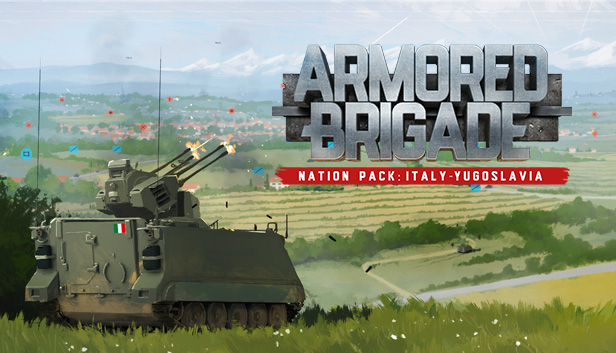
Following World War II, Italy has struggled with negative memories of defeat and mediocre performances, long labouring under the stigma of failure and incompetence. Merely a remnant of a past to be forgotten, war was expressly rejected in the Constitution, but the creation of NATO meant that the Italian Armed Forces were quickly reorganised and expanded within a totally different international framework than before. Preparing for a feared invasion from the east, likely via Yugoslavia, Italy played an important role in the Mediterranean. Still, the country’s strategic culture, a mixture of realpolitik and pacifist tendencies, severely impacted it’s military policies.
The Italian Army at first glance might seem under-equipped compared to its NATO peers. However, it should be noted that they were supposed to defend a well-fortified, and mostly rugged mountainous terrain on their eastern border. Moreover, quality of units varied significantly across the Army. Some were better trained or better equipped, for example the famous Alpini mountain troops or selected armoured and mechanised brigades. Nevertheless, a player might still feel being under-gunned or lacking in certain aspects, so his armoured, mechanized or infantry force should be always reinforced by strong support assets. This also means a great care should be given to mobility, flanking engagements, and emphasizing maximum use of terrain cover; providing for a challenging and dynamic playstyle.
On the other side of the fence was Yugoslavia. Geographically situated between a NATO anvil and the Soviet hammer, the prospect of invasion would permanently dominate Yugoslav strategic plans. Particularly since witnessing the Warsaw Pact intervention in Czechoslovakia in 1968, Yugoslav military doctrine focused on combining its large field army with the guerrilla experience of the Partisans in World War II. In planning, this would entail the armed forces to conduct conventional warfare along a nationwide front, buying time for reserves and the general population to mobilize. Small Territorial Defence units would engage alongside beside regular troops in their local areas, emphasizing mobility and light anti-personnel and anti-armour weapons.
Because armament parity with likely opponents, both in quality and quantity, was hard to achieve, Yugoslavs tried to use limited national defense resources in the most efficient way, rarely if ever squandering even the most obsolete weapons. Units in the game, as well the combat tactics, reflects this strategy. Yugoslavia is a very balanced, all-around force that will perform satisfactorily in every field, but might not always excel. Hence a combined arms approach is extremely important when facing technologically superior forces. And while the center of gravity of the Yugoslav Army are infantry formations that are highly varied, logistically undemanding and survivable, armoured and mechanized are certainly capable of making it tough for any adversary.
Tags & Genres
#Steam
#DigitalKey
#InstantDelivery
- 1 Open the Steam desktop client and log into your Steam account (or open Steam Web Activation ).
- 2 Click Games in the top menu bar, then select Activate a Product on Steam…
- 3 Paste the product key delivered to your HootEmpire Order Vault and click Next.
- 4 Armored Brigade Nation Pack: Italy - Yugoslavia ROW (Steam) is permanently added to your Steam library and ready to download.
Need help redeeming a key? Reach out anytime on our
Support page
or
Discord
.
Verify your account region matches one of the supported regions below before purchasing:
 Worldwide
Keep Exploring
Browse All
Related Keys You Might Like

€9.62
€15.58
Instant Digital Key